Custom Sports Mouthguards for Kids in Newton, MA
Protect Their Teeth Before the Next Practice or Game
A fast ball, an elbow, a stick, or a hard fall can damage a tooth in seconds. The best time to protect your child’s smile is before the season begins, not after the first injury.
A properly fitted sports mouthguard cushions impact and helps reduce the risk and severity of injuries to the teeth, lips, cheeks, tongue, and gums. The fit matters. A guard that feels bulky, slips out of place, or makes it difficult to speak is more likely to spend the game in a backpack.
Bubble Children’s Dentistry & Orthodontics provides custom sports mouthguards for children and teens in Newton Center. Each guard is fitted around your child’s current teeth, bite, stage of dental development, and orthodontic needs.
What Is a Custom Sports Mouthguard?
A sports mouthguard is a removable protective appliance worn over the teeth during athletic and recreational activities.
A custom sports mouthguard is created from the individual shape of your child’s mouth. Unlike a ready-made guard, it is designed to stay securely in place without requiring your child to keep biting down to hold it there.
A secure, comfortable fit can make it easier for an athlete to:
- Keep the guard in throughout practice and games
- Speak clearly with teammates and coaches
- Breathe comfortably during activity
- Avoid constant repositioning
- Protect the teeth and soft tissues of the mouth
The most effective mouthguard is one that fits properly and is worn consistently.
Does My Child Need a Sports Mouthguard?
Mouthguards are commonly associated with football, hockey, and lacrosse, but dental injuries also happen in sports that do not always require one.
A mouthguard should be considered whenever an activity includes a realistic chance of contact with another player, the ground, a ball, a stick, or other equipment.
That may include:
- Football
- Ice hockey and field hockey
- Lacrosse
- Basketball
- Soccer
- Baseball and softball
- Wrestling
- Martial arts
- Volleyball
- Gymnastics
- Skateboarding
- Skiing and snowboarding
Your child should wear the guard during practices as well as games. Many injuries happen during drills, scrimmages, and informal play.
What Does a Sports Mouthguard Protect?
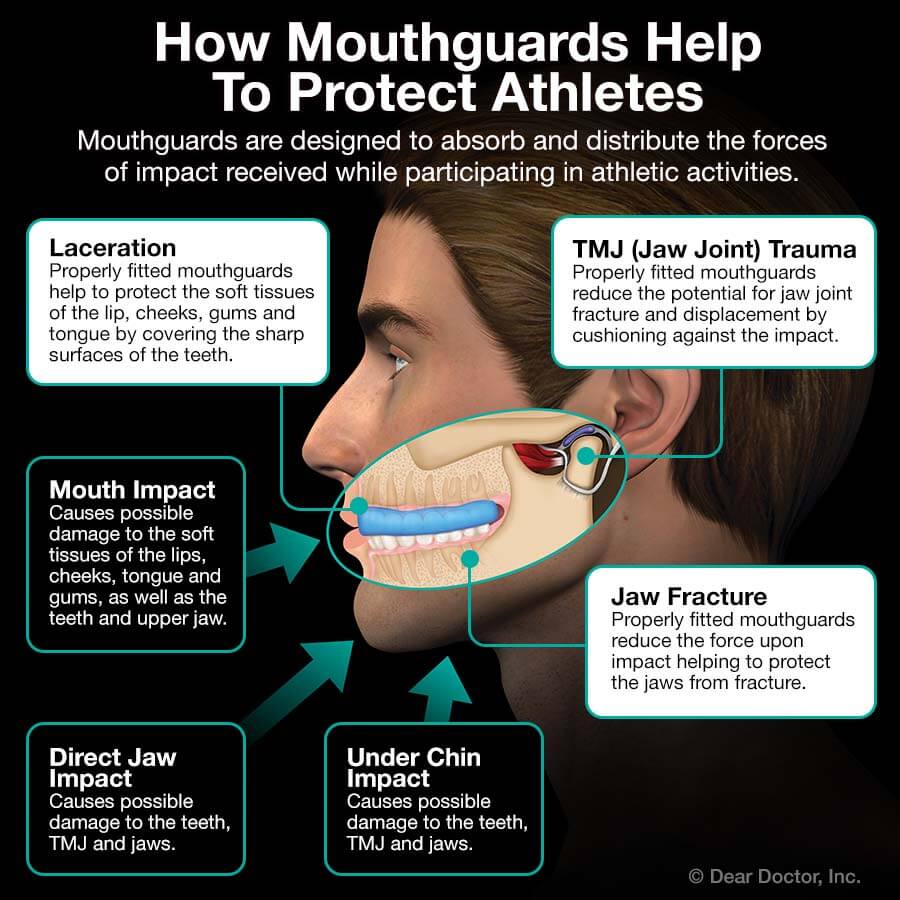
A well-fitted mouthguard helps cushion and distribute the force of a hit to the mouth.
It can help reduce the risk or severity of:
- Chipped or fractured teeth
- Knocked-out or displaced teeth
- Cuts to the lips, cheeks, and tongue
- Damage caused when the upper and lower teeth strike each other
- Injuries involving braces and other fixed orthodontic appliances
A mouthguard is one part of a complete sports-safety plan. It does not replace a properly fitted helmet, face shield, eye protection, or other equipment required for the activity.
Mouthguards should not be promoted as concussion-prevention devices. Their clearest and most established benefit is protecting the teeth and surrounding oral tissues.
Custom vs. Boil-and-Bite vs. Stock Mouthguards
Parents usually encounter three types of athletic mouthguards.
Stock Mouthguards
Stock guards are sold ready to wear in a limited number of sizes. They are inexpensive, but the fit can be loose or bulky. Children often need to clench their teeth to keep one in place, which may affect comfort, speech, and breathing.
Boil-and-Bite Mouthguards
A boil-and-bite guard is softened in hot water and shaped around the teeth at home.
When prepared carefully and worn consistently, it can provide useful protection. The final fit depends heavily on how well it is molded, and it may not adapt evenly around a growing mouth or orthodontic appliances.
Custom Sports Mouthguards
A custom mouthguard is made from records of your child’s teeth and bite.
It is designed for a more secure and individualized fit. Custom guards may be more comfortable, easier to retain, and less distracting during play than a generic guard.
A custom option is especially worth discussing when your child:
- Participates frequently or competitively
- Has had a previous dental injury
- Struggles to keep a store-bought guard in place
- Finds a generic guard too bulky
- Has braces or other orthodontic appliances
- Is in a stage of significant dental development
Why Families Choose Bubble for Custom Sports Mouthguards
Designed for Growing Smiles
A child’s mouth does not stay the same from one season to the next.
Baby teeth fall out, permanent teeth erupt, and the shape of the bite changes. Bubble’s pediatric dentists evaluate the guard in the context of your child’s current dental development rather than treating it as a one-size-fits-all piece of sports equipment.
Pediatric Dentistry and Orthodontics in One Office
Children with braces need protection too, but the mouthguard must leave appropriate room for brackets, wires, and ongoing tooth movement.
Bubble provides pediatric dentistry and orthodontics in the same Newton Center office. Families can discuss mouthguard fit and orthodontic treatment with one coordinated team.
Learn more about orthodontics for kids and teens.
A Fit Your Child Is More Likely to Wear
Protection only works when the guard stays in the mouth.
The fitting process focuses on secure retention, comfort, and practical use during the child’s sport. We also show your child how to insert, remove, clean, and store the guard correctly.
Pediatric Emergency Care When an Injury Happens
No mouthguard can prevent every injury.
If your child chips, fractures, loosens, or knocks out a tooth, Bubble can evaluate the injury and explain the next step. Contact the office as soon as possible after dental trauma.
Learn more about pediatric dental emergencies.
Can My Child Wear a Mouthguard With Braces?
Yes. In many sports, protecting the mouth is even more important while a child has braces.
A blow to the face can damage brackets or wires and can press the appliances into the lips or cheeks. The mouthguard needs enough room to fit around the braces without interfering with planned tooth movement.
Do not assume that the guard your child wore before braces will continue to fit. Bring the existing guard to the appointment so the dental or orthodontic team can check it.
Children with removable retainers or aligners are generally instructed to remove them during contact sports. Ask the orthodontic team where to store them safely during play.
What to Expect at a Mouthguard Fitting
We Evaluate Your Child’s Teeth and Bite
The dentist checks your child’s teeth, gums, bite, and stage of dental development. Tell us which sports your child plays, how often they participate, and whether they wear braces or another orthodontic appliance.
We Capture the Shape of the Teeth
The team records the shape and position of the teeth so the mouthguard can be created for your child’s individual mouth.
The Guard Is Made
The mouthguard is produced from those records using material intended to absorb and distribute impact.
The team will let you know when it will be ready and whether a separate fitting visit is needed.
We Check the Fit
At delivery, the guard is checked for comfort, coverage, and retention.
Your child should be able to place and remove it independently while keeping it securely in position during activity.
How to Clean and Store a Sports Mouthguard
A mouthguard spends a great deal of time around saliva, sports bags, locker rooms, and playing fields. Regular cleaning matters.
After each use:
- Rinse the guard with cool water
- Clean it gently with a soft toothbrush or mild soap
- Allow it to dry before closing the case
- Store it in a sturdy, ventilated container
- Keep it away from hot water, direct sunlight, and hot cars
- Keep the case away from pets
Bring the mouthguard to your child’s regular dental appointments so the fit and condition can be checked.
When Should a Child’s Mouthguard Be Replaced?
There is no universal six-month replacement rule.
A mouthguard should be replaced when:
- It becomes torn, thin, rough, or distorted
- Your child can no longer keep it securely in place
- It causes discomfort
- Permanent teeth have erupted
- Baby teeth have fallen out
- The bite has changed
- Braces have been placed, removed, or adjusted significantly
- The guard no longer provides appropriate coverage
Children and teens may need new guards more often than adults because their teeth and jaws are still developing.
Do not wait until the next season if the guard is damaged or no longer fits.
How Much Does a Custom Sports Mouthguard Cost?
The cost depends on the type of guard recommended and your child’s dental or orthodontic needs.
Dental insurance coverage varies by plan. Our team can review available benefit information and submit a pretreatment estimate when appropriate. A pretreatment estimate is not a guarantee of coverage, but it can help you understand the expected cost before moving forward.
Learn more about insurance and finance options.
Custom Sports Mouthguards for Greater Boston Families
Bubble Children’s Dentistry & Orthodontics is located at:
792 Beacon Street
Newton Center, MA 02459
We welcome children and teens from Newton, Brookline, Wellesley, Needham, Watertown, Boston, and surrounding Greater Boston communities.
Whether your child is starting a first season, moving into a more competitive league, or beginning orthodontic treatment, we can help you choose protection that fits properly and works with their developing smile.
Get Your Child Ready for the Season
A mouthguard is easiest to plan before practices and games begin. Scheduling early also gives the dental team time to check your child’s current teeth, orthodontic appliances, and fit.
Call 617-655-9410.
Custom Sports Mouthguard FAQs
No. A mouthguard is worth considering whenever a child could fall, collide with another player, or be struck by a ball, stick, elbow, or piece of equipment. Dental injuries occur in both contact and non-contact activities.
A custom guard provides an individualized fit and may be more comfortable and easier to keep securely in place. A properly fitted boil-and-bite guard can still provide useful protection. The best choice depends on your child’s sport, age, braces, dental development, and willingness to wear it consistently.
Mouthguards are well established for reducing dental and oral injuries. Evidence that they prevent concussions is mixed, so a mouthguard should not be presented as a substitute for helmets, medical concussion protocols, or other sport-specific safety equipment.
Yes, but the guard needs to fit around the brackets and allow room for tooth movement. Bubble’s pediatric dental and orthodontic teams can help determine which option is appropriate during treatment.
No. A mouthguard fitting is noninvasive and should not be painful. The records used to capture the shape of the teeth may feel unfamiliar, but the process is generally brief.
No. Your child can return to school, sports, eating, and normal activities immediately after the fitting appointment.
It depends on growth, tooth eruption, orthodontic movement, wear, and how well the guard is cared for. Replace it when it becomes damaged, uncomfortable, loose, or no longer fits the teeth correctly.
Most sports mouthguards cover the upper teeth. A dentist or orthodontist may recommend additional or different protection when braces or other appliances are present.
Yes. The mouthguard should be worn during practices, drills, scrimmages, and games whenever there is a risk of impact.
Rinse it after every use and clean it with cool water, mild soap, or a soft toothbrush. Let it dry before placing it in a ventilated case. Do not expose it to boiling water, direct sun, or high heat.
Coverage varies. Some plans may contribute while others consider sports mouthguards an elective preventive appliance. Bubble can review available benefit information and request a pretreatment estimate when appropriate.
Stop play and contact a pediatric dentist promptly if a tooth is chipped, fractured, loose, displaced, or knocked out. Seek emergency medical care for loss of consciousness, breathing difficulty, uncontrolled bleeding, or a suspected jaw or head injury.